Turn Google Maps Into a Local Referral Engine
Google Maps can be a steady stream of new jobs for Vancouver service businesses, or it can be a leaky bucket. A plumber might show up at the top for "emergency plumber" when someone's ceiling is dripping in Mount Pleasant, but be almost invisible for "boiler repair in Vancouver." Same crew, same truck, totally different results for revenue.
That gap happens because being listed on Google Maps is not the same as being clearly understood by Google or AI tools. Searchable does not always mean selectable. Your business can show up somewhere, but still be skipped when people or AI assistants are picking who to call.
For contractors, trades, and local service businesses across Metro Vancouver, Google Maps has become a main front door. When pipes freeze, basements flood, roofs leak, or heaters quit, people open Maps first. Behind what they see are "signals" about your services, locations, trust, and real-world behaviour. Our work at SpottableAI focuses on strengthening those signals so local businesses are easier to find, trust, and consider, without making any promises about what Google or AI will do.
How Proximity Really Works in Vancouver Neighbourhoods
Proximity sounds simple. Google often favours businesses that are closer to the person searching. But in practice, proximity looks different in each part of Metro Vancouver.
In dense areas like Downtown, Kitsilano, or the West End, someone searching "plumber" might see results within just a few blocks. In more spread-out areas like Surrey, Langley, or Maple Ridge, Google can stretch proximity over a much wider zone because people drive farther for service.
Here are a few key truths about proximity:
- You cannot "hack" your physical location without risk
- Moving your pin on the map away from your real address can trigger problems
- Service area settings help but do not replace your real address
- Clear, honest location signals give you the best chance to show up where it makes sense
A heating contractor in Burnaby, that wants more "furnace repair" calls when the weather cools needs strong location signals that match reality:
- Accurate address and service area in the Google Business Profile
- Clear mention of Burnaby and nearby areas like New Westminster on the website
- Pages or sections that mention real neighbourhoods where work is done
Compare that to a landscaper in Richmond aiming for "leaf cleanup Richmond" in the fall. Proximity still matters, but people expect a Richmond address or strong Richmond signals. A generic "Greater Vancouver" message with no real local detail can hold them back.
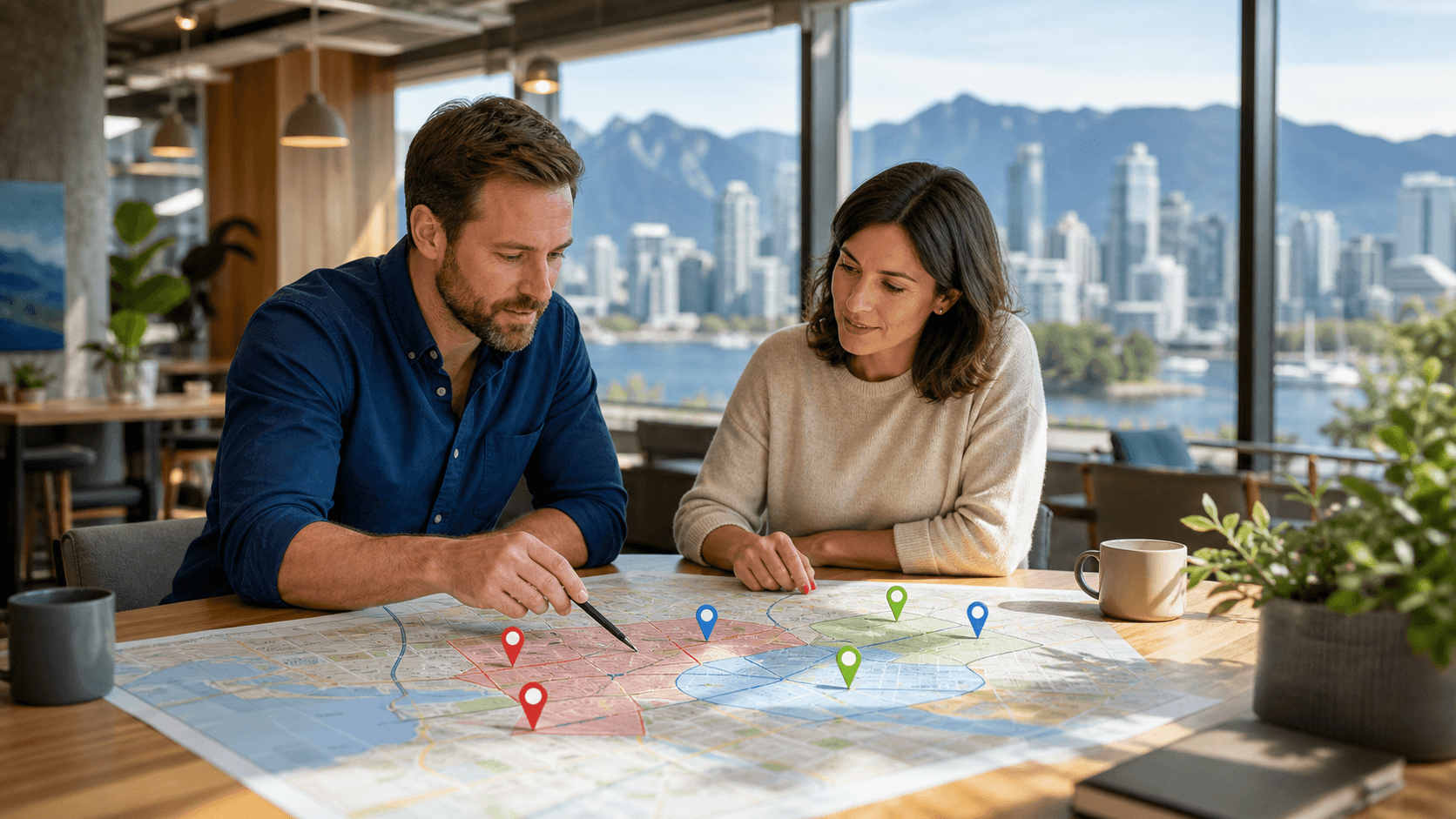
Good SEO specialists in Vancouver do not promise city-wide domination. Instead, they map out realistic visibility zones based on your address, competition, and demand. That honest view is also key for what we call the AI Visibility Gap. If AI tools see fuzzy or conflicting location details, your business might never be mentioned in summaries or recommendations, even when you are actually close by.
Choosing Categories That Match Real-World Services
Google Business Profile categories tell Google and AI tools what you do. They are not just a form to fill out. They are labels that shape which searches you can show up for.
Think of it like this:
- Primary category: what you are mainly known for
- Secondary categories: other services you truly offer
For a plumbing company, the primary category might be "Plumber." Secondary categories could cover real services such as:
- Drain cleaning
- Sewer service
- Water heater installation and repair
An electrical contractor that does a lot of EV charger work might set "Electrician" as the primary category, then add a secondary category that reflects EV charger installation if it fits. A painting company that also handles drywall repair might choose painting as the primary, with drywall-related categories as secondary.
Mismatched or vague categories make things muddy. If your profile says "General contractor" but almost all of your work is roofing on the North Shore, Google and AI tools get mixed signals about when to show you. Being online is not the same as being understood.
Across Vancouver, two businesses that look similar on the street might pick different categories:
- A roofing contractor in North Vancouver may lean into roofing-specific categories that match steep-slope and wet-weather work
- A general contractor in East Van doing full renovations might keep a broader primary category, but add clear secondary ones linked to renovations or kitchen and bath work
Thoughtful category choices are one of the simplest ways to move from just searchable to more selectable on Google Maps and in AI-driven search experiences.
Reviews, Local Trust, and Behavioural Clues Google Watches
Reviews are trust signals for both people and algorithms. It is not only about your star rating. Google and AI tools look at patterns that hint at real, local service.
Helpful review signals include:
- Volume: a steady stream of honest reviews over time
- Recency: fresh reviews that show you are still active
- Specifics: clear mentions of services and locations
For example, a Coquitlam HVAC company with reviews that say things like "furnace replacement in Port Moody" or "AC repair near Coquitlam Centre" sends clearer signals than a Vancouver company with a few "Great service" comments and nothing else. The words people use point to both service type and area.
Google also watches how people interact with your profile. These are behavioural metrics, but you do not need to speak in jargon to work with them. The platform pays attention to:
- Clicks for directions
- Calls from your profile or from Maps
- People scrolling through your photos or reading reviews
- Clicks to your website
These real-world actions support relevance. If many people in a certain part of Surrey tap on your listing for drainage help in the fall, that pattern can support your visibility for similar searches in that area.
Seasonal timing matters too. Fall and early winter are key periods for heating, roofing, and drainage work across Metro Vancouver. That is also a smart time to ask happy customers for reviews that mention:
- The exact service, like "furnace tune-up" or "roof leak repair"
- The area, like "in Kerrisdale" or "in North Delta"
No one can control rankings or decide how AI tools talk about you. What you can do is build strong, honest trust signals that raise the probability you are found and considered in both Maps and AI summaries.
Turning Your Google Maps Profile Into a Selection Magnet
A lot of Google Business Profiles for trades are busy but confusing. They have random photos, half-finished descriptions, and old hours. When someone is standing in their driveway with a leaking pipe, they do not have time to guess what you do.
A clearer profile makes you faster to choose. Helpful upgrades include:
- A clean, readable business description in plain language
- A service list that matches what you actually offer
- Current hours, including clear notes for emergency or after-hours work if you provide it
- Real project photos from Vancouver neighbourhoods and surrounding cities
The difference between "busy but confusing" and "clean and focused" often comes down to:
- Whether your main services are obvious at a glance
- If people can tell which areas you serve without scrolling forever
- How easy it is to find a phone number or simple contact option
Google Maps and local trust go hand in hand. Consistent name, address, and phone details wherever you appear online help support the trust picture. SEO specialists in Vancouver often start with this foundation work before any advanced tactics, because it gives both search and AI tools a clearer view of who you are and when you are a fit.
That is the shift from searchable to selectable. Your profile stops being just another pin on the map and starts to look like the obvious choice for certain jobs in certain areas.
From Hidden to Chosen: Next Steps for Vancouver Contractors
The heart of Google Maps rankings is not tricks. It is about building clear visibility foundations across four areas:
- Proximity: honest, consistent location signals
- Categories: labels that match real services
- Reviews: steady, specific, local feedback
- Behaviour: real people taking real actions on your profile
The AI Visibility Gap shows up when these signals are weak or mixed. AI tools read what already exists online. If your services, locations, and trust signals are fuzzy, you are more likely to be skipped, even if your crew does excellent work every single day.
For Metro Vancouver contractors heading into fall, a simple checklist could look like this:
- Confirm that your address and service area are correct and consistent
- Review your primary and secondary categories and align them with your real work
- Put a review request habit in place for every happy customer
- Update your profile with seasonal services, like heating tune-ups or gutter cleaning
- Add a few fresh photos from recent projects in your key neighbourhoods
Over time, these steps help tools like Google and AI systems understand your business better. That understanding improves the odds that you will be found, trusted, and chosen more often when people nearby search for help and need to act fast.
Frequently Asked Questions
How long does it take to see changes in Google Maps rankings?
For most Vancouver service businesses, you might notice small shifts within a few weeks of cleaning up categories, fixing address issues, and getting fresh reviews, but steadier improvement usually takes a few months. Google needs time to process new signals, compare you with nearby competitors, and see real-world behaviour like calls and direction requests.
Do I need an office in Downtown Vancouver to rank in the city?
No. You do not need a Downtown office to appear for Vancouver searches, but your physical location still matters. A Burnaby or Richmond address can rank in parts of Vancouver, especially for mobile searchers nearby, but you are unlikely to dominate the entire city. Service-area setup, clear location content on your site, and consistent listings help define where you are realistically competitive.
Can SEO specialists in Vancouver guarantee top spots on Google Maps?
No legitimate SEO specialist can guarantee specific rankings or control how AI tools talk about your business. A good local partner can strengthen the signals that Google and AI systems may use, reduce confusion about your services and locations, and improve the probability that you are found and considered when people are searching.
How important are photos and posts on my Google Business Profile?
Photos and posts help make your profile feel real and current. For contractors and trades, project photos from real Vancouver neighbourhoods and seasonal updates like fall tune-up offers can increase engagement. Those clicks and interactions are behavioural signals that may support your visibility, and they also build trust with people deciding who to call.
Is it still worth investing in Google Maps if AI answers are growing?
Yes. AI tools still lean heavily on the same underlying signals: clear services, clear locations, clear trust, and consistent details across the web. A strong Google Maps presence supports those signals, helps close the AI Visibility Gap, and gives you a better chance of being both searchable and selectable, whether someone is using Maps, traditional search, or an AI assistant.
Get Started With Your Project Today
If you are ready to turn more local searches into real customers, we are here to help you make that happen. At SpottableAI, our team of dedicated SEO specialists in Vancouver will work with you to build a strategy that fits your goals and budget. Share a bit about your business and we will outline clear, practical next steps to improve your visibility. Let's start shaping a search strategy that supports your long-term growth.