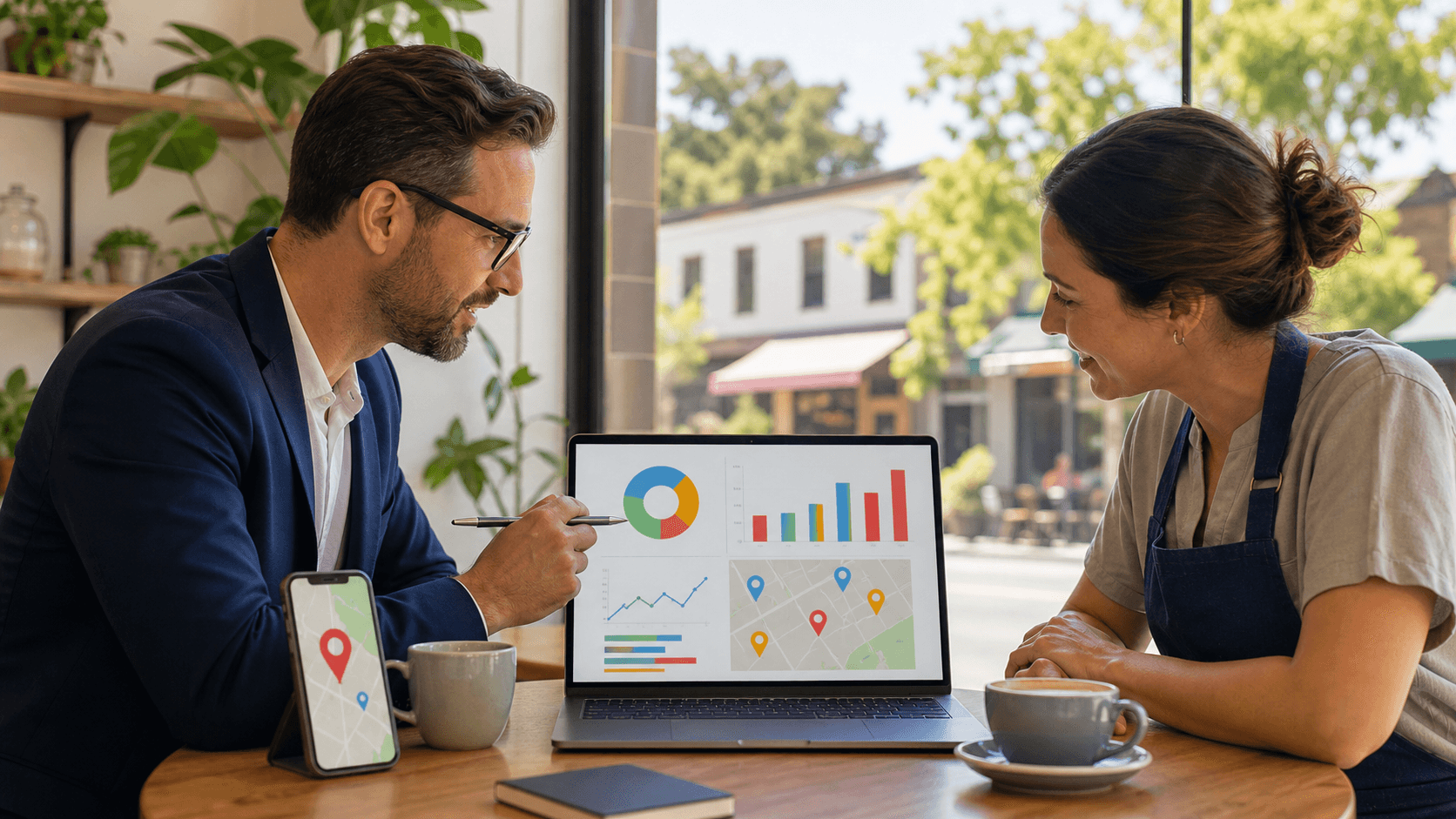
Why Local Pack and AI Answers Often Disagree
Many Canadian service businesses are seeing something strange. You search your own service on Google, you show up nicely in the Local Pack, you see yourself on Google Maps, but when you ask an AI tool for the same thing you barely exist or do not show at all. It feels random, but it is not.
People now hop between Google Search, Google Maps, reviews, and AI tools before they choose who to hire. When these tools disagree, your customers get confused and your busy seasons get riskier. In this article, we will explain why Local Pack and AI answers drift apart, how to spot problems, and what you can fix so your signals are stronger across all of them.
Why Google, Maps, and AI Give Different Answers
Think of a homeowner in October in a Canadian city. Nights are getting cold, the furnace smells a bit off on the first use, and they search on their phone for help. On Google Search, they see one set of furnace companies in the Local Pack. In Google Maps, a different list shows when they zoom around their neighbourhood. Then an AI tool suggests other names again, sometimes not even local.
This happens because each system leans on a different mix of signals.
- Local Pack: your Google Business Profile, proximity to the searcher, reviews, categories, and basic website signals
- Google Maps: map location, service area settings, reviews, photos, and Business Profile details
- AI-assisted tools: clear website content, consistent service and location details, proof you are real, plus what they can safely summarise
If your services, locations, and proof are clear in one place but fuzzy in another, you get what we call an AI Visibility Gap. You might look strong in the Local Pack but almost invisible in AI summaries, or you might be easy to find in Maps but missing from AI style shortlists. That gap shows up as missed calls before winter, slower bookings during fall clean-up season, or customers choosing competitors they see more often across tools.
Core Signals Search and AI Both Need to See
The good news is that Local Pack, Maps, and AI tools are all looking for similar things, just in different mixes. The core signals fall into four buckets: clear services, clear locations, clear proof, and clear trust signals.
Services need to be written in plain language that matches how people search. For example, "furnace tune-up in Calgary" or "gutter cleaning in Halifax" is clearer than only saying "full home comfort solutions" or "property services." These details work best on real service pages, not just a single bulleted list on your homepage.
Locations should be just as clear. That means:
- Stating your city or cities in your headings and text
- Describing key neighbourhoods you serve
- Matching what you say on your website with your Google Business Profile service area
- Remembering that many people search on their phones
Proof and trust signals help both search and AI tools feel more confident about mentioning you. These include:
- Recent, honest reviews
- Project or job photos that look current
- Short case stories or "before and after" style explanations
- Simple team or owner bios that show you are a real, Canadian-owned business
- Consistent name, address, and phone number everywhere
When these signals line up, you raise the chance of being found, trusted, and chosen across Google Search, Google Maps, and AI-assisted tools.
How to Diagnose a Local Pack and AI Disagreement
You can run a basic visibility check-up in under an hour. Keep it simple and practical.
First, search your main service and city:
- On Google Search, and look at the Local Pack
- Inside Google Maps for the same phrase
- In at least one AI tool using a natural question, like "Who does furnace tune-ups in [city]?"
Write down:
- Which businesses show up in each place
- What details are shown about you
- Which of your competitors show up that you know are similar to you
Watch for red flags like:
- AI answers naming competitors but not you at all
- AI describing services you no longer offer, or missing ones that matter most
- Locations being vague or wrong, such as mentioning a city you do not really serve
- Reviews not being mentioned, even though you know you have some
Next, compare your Google Business Profile with your website side by side:
- Business name and primary category
- Phone number, email, and hours
- Service list and descriptions
- Cities and neighbourhoods you mention
- Photos and short descriptions
Any mismatch is a weak signal for both search and AI tools. A short DIY audit list could include:
- Is my main service obvious in my homepage heading?
- Do I have a separate page for each key service?
- Do I clearly list the cities I serve in more than one place?
- Is my Business Profile fully filled out and matching my site?
- Are there recent reviews and photos that show current work?
Whatever feels thin, confusing, or out of date is usually where your AI Visibility Gap starts.
Practical Fixes to Close Your AI Visibility Gap
You cannot control how AI tools answer, but you can make it easier for them to see and trust you. Focus on clear, practical fixes that also help your Local Pack and Maps presence.
Fast wins on your Google Business Profile:
- Update hours, especially for seasonal changes
- Rewrite your business description in plain Canadian English
- Add or fix service categories and service areas
- Remove duplicate or old listings
- Add fresh, real photos that match the season and your actual work
On your website, aim for tidy, human-friendly pages:
- One clear page for each main service, with simple headings and short paragraphs
- Real questions and answers you hear from customers every week
- Location wording that matches what is in your Business Profile
- Contact details that are easy to spot on every page
Trust-building upgrades help AI and humans feel better about choosing you. Ask for a few new reviews from recent jobs, show short job stories or project summaries, and make it very obvious how someone can start working with you. These steps do not force AI tools to mention you, but they strengthen the signals those tools may use when they build local answers and shortlists.
How SpottableAI Supports Human-LED Local Visibility
SpottableAI is a WebMax Canada service built for Canadian service-based businesses that live with real seasons, busy bursts, and slower shoulder periods. Our focus is not on hype or big promises, but on human-led SEO and AI Visibility work that cleans up and strengthens the signals Google Search, Google Maps, and AI-assisted tools rely on.
Our process is simple and grounded. We map out your services and locations, tighten your Google Business Profile, and improve local search optimisation on your website so your core pages speak clearly about what you do and where you work. We also help surface your proof and trust signals, so you move from just being searchable to truly being selectable when someone needs your service.
We do not promise guaranteed AI rankings or pretend we control how AI systems answer. What we do is build clearer visibility foundations so that, when people search and when AI tools build answers, your business has a fair shot at being found, trusted, and chosen in your local market.
Frequently Asked Questions About Local Search and AI Visibility
How Is Local Search Optimisation Different When AI Tools Are Involved?
Local search optimisation used to focus mostly on ranking in Google's Local Pack and Maps. With AI-assisted tools, it now also means making your services, locations, and proof very clear and consistent so AI can understand and describe what you do. You are not optimising for a single "AI ranking" but strengthening the signals AI tools may use when they build answers.
Why Does My Business Show in Maps but Not in AI-Style Answers?
Maps leans heavily on your Google Business Profile, proximity, and reviews. AI-style answers tend to draw more from website content and broader online signals. If your website is thin, outdated, or unclear about services and locations, AI tools may simply have less to work with, even if Maps knows you well.
Can Anyone Guarantee My Business Will Appear in AI Answers?
No. No one controls how AI systems choose to answer or which businesses they mention. What you can do is make it easier for those tools to understand and trust your business by fixing unclear details, improving your content, and building strong, consistent signals across the web.
What Are the First Fixes I Should Make to Improve My Visibility?
Start by cleaning up your Google Business Profile, making sure your services, hours, and locations are accurate. Then update your website with clear service and location pages in plain language, and encourage a few new reviews from recent customers. These changes help both traditional search and AI-assisted tools.
How Does SpottableAI Work with Canadian Service Businesses?
SpottableAI, a WebMax Canada service, reviews how your business appears across Google Search, Google Maps, and AI-assisted tools, then helps strengthen the signals they rely on. The work is human-led and practical, aligning details, improving local search optimisation, surfacing proof and trust, and giving you a clearer path from being searchable to being selectable in your local market.
Boost Local Visibility And Attract More Ready-To-Buy Customers
If you are ready to turn local searches into real customers, we are here to help you take the next step. Our team at SpottableAI focuses on practical, data-driven strategies that make your business easier to find and choose. Explore how our local search optimisation solutions can strengthen your presence where it matters most. Reach out today so we can map out clear next steps for your growth.