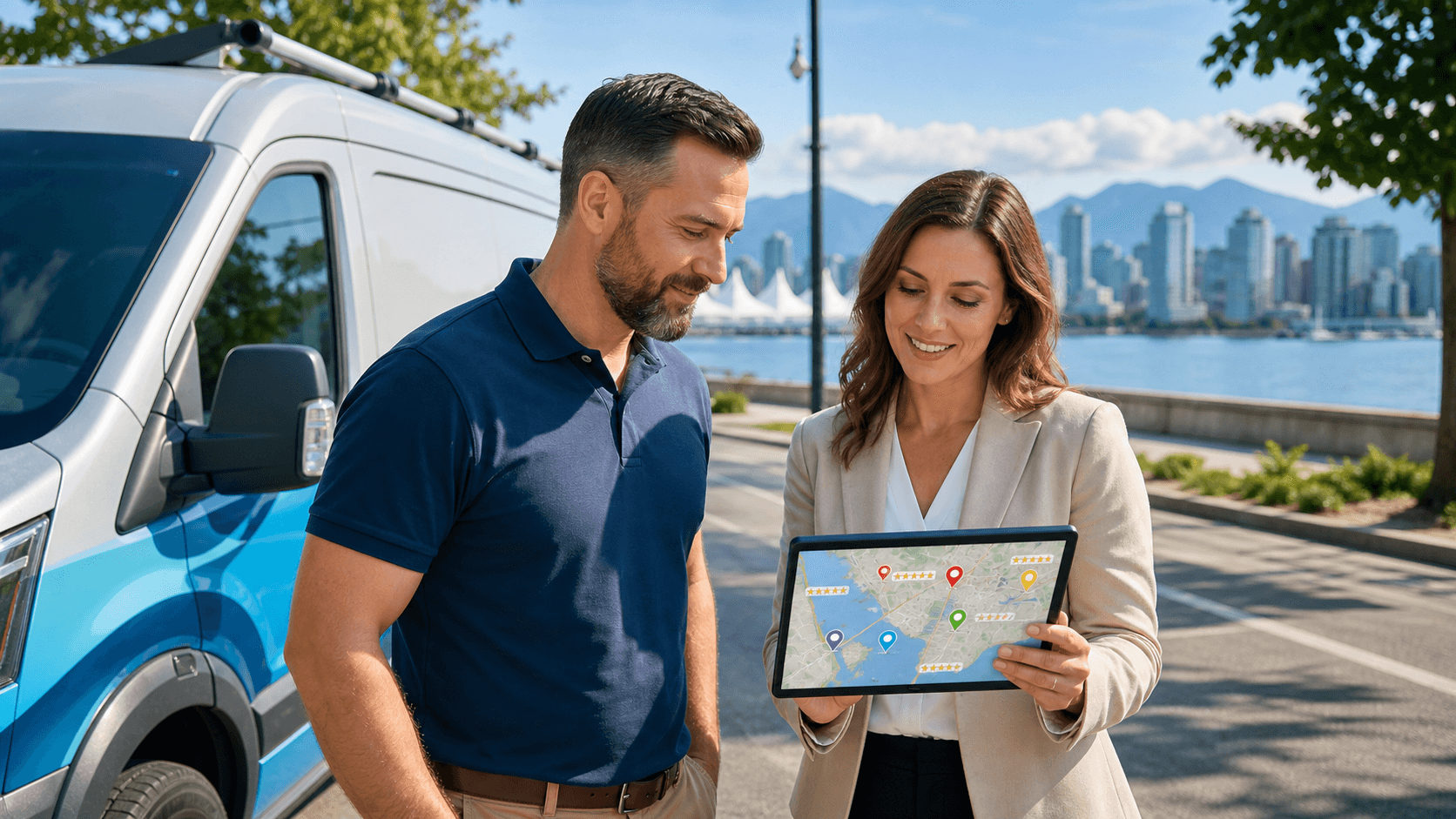
Local listing optimization helps turn random online clicks into real jobs. When your Google Business Profile is clear, Google Search, Google Maps, and AI tools can understand what you actually do, where you do it, and who you help. That is how you move from being just another blue pin on the map to a business people feel safe choosing.
In this article, we will walk through how to use your Google Business Profile services, products, attributes, and Q&A to support AI-assisted search. The goal is simple: help more people in your service area find you, trust you, and book you, especially during the busy Canadian summer season.
From Searchable to Selectable in an AI-Driven World
Being online is not the same as being understood. Many contractors, trades, and local service businesses are searchable. Your name shows up somewhere in Google or Maps. But your profile might be too fuzzy to be confidently recommended.
Searchable means:
- You appear for your business name
- You might show up on the map if someone is very close
- People still have to guess what you actually do
Selectable means:
- Your main service is obvious at a glance
- Your service area is clear and believable
- Your reviews, photos, and details make you easy to choose
AI tools and Google look at signals like:
- Categories and services
- Products and descriptions
- Attributes, reviews, and photos
- Q&A content and website details
If these signals are thin or messy, you fall into the AI Visibility Gap. You exist online, but AI-assisted tools are less likely to include you when someone asks for the best roofer in Calgary or a same-week plumber in Mississauga. Clear, consistent local listing optimization does not guarantee rankings, but it improves the probability of being found and considered.
Structuring GBP Services Around Real Jobs
Most contractors and trades offer real, hands-on jobs, not vague lines like "home services." Your Google Business Profile should reflect that.
Start with the right primary category. For example:
- Plumbing Service
- Roofing Contractor
- HVAC Contractor
- Electrician
Then, add services that match actual jobs people ask for, in simple words:
- Furnace installation
- AC repair
- Basement waterproofing
- Driveway paving
- Deck building
- Panel upgrades
A few tips that help AI-assisted search connect the dots:
- Use the phrases your customers say, not industry jargon
- Add seasonal jobs like AC tune-ups in summer and driveway sealing when the weather is warm
- Match services to real places you work, such as cities and nearby towns
When someone types or says "who does AC repair" or "who can waterproof my basement in Ottawa," a clear service list helps Google Maps and AI tools understand you do that specific job, in that kind of location. That is how you start to close the AI Visibility Gap and move from searchable to selectable.
Turning Products, Photos, Attributes, and Q&A Into Proof
On Google Business Profile, products are not just for stores. Service businesses can use products as simple packages that make it easier to choose you.
For example:
- Summer AC tune-up package
- Kitchen reno starter package
- Emergency drain clearing
- Cottage dock repair
- Exterior power washing
Keep product names short and clear. Use everyday language. In the description, explain:
- What is included
- Who it is for (homeowners, landlords, small offices)
- Rough timelines or how fast you usually respond
Photos help people trust that you can handle the job. They also support your local signals. Add project photos with short captions like:
- "New asphalt driveway in north Edmonton"
- "AC replacement in downtown Vancouver condo"
- "Basement waterproofing job in east Hamilton"
Attributes fill in extra details people and AI tools care about. Some useful ones for Canadian businesses:
- Speaks French
- Women-led or veteran-led
- 24/7 service or emergency service
- Wheelchair accessible entrance
- On-site service
Only choose what is true. Clear attributes can show who you serve and how you work, which can help both people and AI tools understand if you are a good fit.
Your GBP Q&A section is another powerful piece. You can seed common questions there, such as:
- Do you work in [nearby town]?
- Do you offer free estimates?
- Can you handle same-week appointments in July?
- Do you do both repairs and full replacements?
Then answer in simple, friendly language. Repeat your service area, job types, and typical timing. Over time, these answers become a mini knowledge base that AI tools may read and learn from. When someone asks a similar question, you have already given clear, consistent information.
Building Stronger Signals Across Google, Maps, and AI Tools
Local listing optimization is not just about one profile. Your details need to match everywhere people look at you.
Watch for:
- The same business name, address, and phone number across your website and listings
- Matching hours of operation
- Service areas that line up with what you say in your description, services, and Q&A
- Up-to-date photos showing recent work, not just old truck shots
On Google Maps, recent reviews, clear service areas, and current photos all work together as trust signals. When they support what you list in services, products, attributes, and Q&A, you build clearer visibility foundations. This helps AI tools and search platforms feel more confident including you when someone asks for local help.
At SpottableAI, a WebMax Canada service, we focus on human-led SEO and AI Visibility for contractors, trades, and local service businesses. We review your signals across Google Business Profile, your website, and other key listings. Then we suggest practical updates that reduce the AI Visibility Gap by making your services, locations, proof, and trust signals much easier to understand.
FAQs About Local Listing Optimization for AI
What is local listing optimization and why does it matter now?
Local listing optimization means tuning up your Google Business Profile and related listings so Google Search, Google Maps, and AI tools can clearly understand what you do, where you work, and who you serve. When your details are clear, you are more likely to be found, trusted, and chosen by local customers.
Can anyone guarantee that my business will appear in AI answers?
No. No one controls AI answers. What you can do is strengthen the signals AI tools may use. Clear and consistent services, products, attributes, Q&A, and reviews improve the probability that your business is understood and included when people ask for local help.
How is this different from regular SEO?
Regular SEO often focuses on website rankings. Local listing optimization pays closer attention to Google Business Profile, Maps, reviews, and local service areas. It is about moving from simply searchable to clearly selectable when someone nearby needs a contractor or local service.
Does this work for small and mid-sized Canadian businesses?
Yes. This approach is Canadian-owned, practical, and built for real contractors, trades, and service businesses that rely on local customers, not giant marketing teams. It is about clear communication, not flashy tricks.
How does SpottableAI actually help?
SpottableAI, as a WebMax Canada service, reviews your current profiles and online signals, then helps fix unclear or missing details. We focus on organizing your services, products, attributes, and Q&A so that people, Google, Maps, and AI-assisted tools can better understand what you do, where you do it, and why you can be trusted.
Boost Your Local Visibility And Attract Ready-To-Buy Customers
If you are ready to show up where your customers are already searching, we can help you take the next step. At SpottableAI, we use data-driven local listing optimization strategies to make your business easier to find and trust. We will review your current listings, fix inconsistencies, and highlight what makes your business stand out. Reach out today so we can start building a stronger local presence for you.