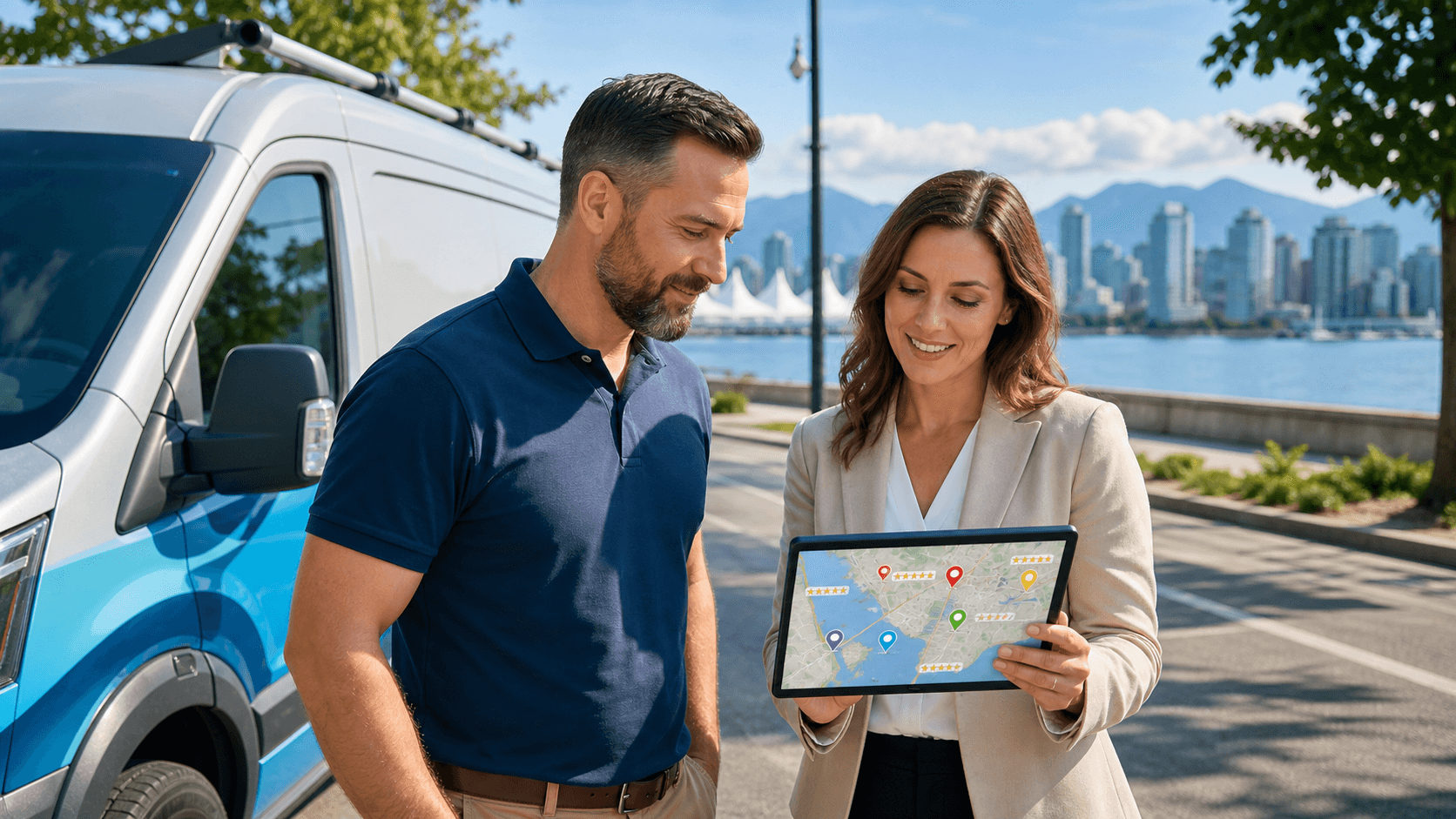
Service Area Marketing Signals Are Shifting Fast
People do not search in one straight line anymore. Someone might ask Google for a local roofer, open Google Maps to check who is actually nearby, flip to Apple Maps on their phone, scan a few reviews, then ask an AI tool like ChatGPT or Perplexity who it would pick. All of that can happen in a few minutes.
For Canadian service area businesses, summer makes this even busier. Landscaping, HVAC, roofing, exterior painting, moving and tourism services all feel the rush when the weather warms up and the sun finally sticks around. The result is more people looking and more businesses competing to be found.
Being online at all is no longer the real edge. What matters now is how clear your signals are about three simple things: what you do, where you actually work, and why someone should feel safe choosing you. Those are the signals search engines and AI tools may use when they decide who to show or mention.
Why Being Online Is Not the Same as Being Clear
Many service area owners already have the basics. There is a website, a Google Business Profile, maybe a Facebook page or Instagram account. Yet they still hear things like, "I did not know you did AC tune-ups," or "I could not find you when I searched."
That gap comes from fuzzy or scattered information, such as:
- Service lists that are just buzzwords, not clear problems you solve
- Vague "Greater Area" coverage with no real city or neighbourhood names
- Old hours still listed for winter or last season
- Different phone numbers or addresses in different directories
When information is all over the place, both people and systems struggle. Search engines and AI tools try to build a simple story about your business: what you offer, who you serve and if you seem trustworthy. If those pieces are incomplete, inconsistent or buried in long blocks of text, it is harder for them to confidently recommend you.
So you can be "online" and still be nearly invisible at the exact moment people are ready to book.
How Service Area Marketing Signals Actually Work
Service area marketing is about making it easier for people inside your real service zones to discover, understand and choose you, no matter where they start their search. It is the opposite of spraying your name everywhere and hoping.
At its core, it comes down to three kinds of signals.
- What you do
Clear, concrete descriptions of services help both humans and AI tools. That means:
- Naming services in plain language people actually search for
- Explaining the problems you fix, not just listing tools or brand names
- Grouping services into helpful packages instead of one giant list
- Where you work
For many Canadian owners, this is the fuzziest part. You might say "we serve the region," but people do not search that way. They search by:
- City and town names
- Neighbourhoods and suburbs
- Major roads, corridors and nearby landmarks
Spelling out the actual places you serve, instead of only saying "Greater Area," makes it far easier for search and AI tools to match you with real requests.
- Why you are trusted
Trust shows up in simple, grounded ways:
- Recent reviews that mention real jobs and locations
- Photos of your work, vehicles or team in local spots
- Clear, matching name, address and phone number across the web
- Local associations, licences or partnerships you hold
When these signals line up, AI tools have a clearer picture of who you are. That can improve the chance you are found and considered when someone asks for local help, even if no one can control the exact AI answer.
Turning Fuzzy Service Areas Into Clear Local Signals
You do not need to overhaul everything at once. A few focused changes this season can build stronger visibility foundations that last all year.
Start with your services. For summer, many service area businesses offer things like AC tune-ups, patio builds, exterior painting, roof checks or local tours. Instead of just listing those as labels, try writing them as problems solved:
- "AC tune-up so your home stays cool through heat waves"
- "Patio builds ready for weekend barbecues"
- "Exterior painting that stands up to sun and rain"
Next, clarify your geography. On your site and profiles, make it obvious where you actually go most often:
- List top cities, towns and neighbourhoods you love to serve
- Mention key corridors or routes you focus on
- Use the place names locals actually say, not just government labels
Then, clean up your availability. Summer hours, seasonal surcharges, emergency service details and booking timelines should be:
- Accurate
- Easy to find
- The same across your website, Google Business Profile and main directories
All of this makes life easier for real people, especially when they use voice search: "Hey Google, who is the best AC repair open this evening?" At the same time, it gives AI tools clearer pieces to work with when they scan the web for local options. You still cannot control the final answer, but you can show up as a sharper, more consistent choice.
How SpottableAI Strengthens Local and AI Signals
SpottableAI is a Canadian, founder-led SEO and AI visibility consultancy focused on local and service area businesses. From our own experience working with owners, we built a practical WebMax approach to tidy and improve the signals that matter most for search and AI tools.
In simple terms, the work looks like this:
- Human-led auditing of your current online footprint, including your website, Google Business Profile, main directories, reviews and content to spot fuzzy, missing or mixed-up signals
- Rewriting and reorganizing key pages so services, locations and trust elements are easier for people and systems to understand at a glance
- Aligning your core business details and seasonal offers so Google, Maps and AI tools are all seeing the same clear story
The goal is not magic rankings or guaranteed AI mentions. The goal is to improve the probability that your business is found and taken seriously wherever people search.
Common Questions About Service Area Visibility
Do I still need a website if I get calls from Google Maps?
Yes. A clear, current website is a core visibility foundation. Your profile is often a quick snapshot, while your site can explain services, locations, pricing ranges and seasonal offers in far more detail. That extra clarity helps both Maps and AI tools understand you better.
How big should my service area be online?
Trying to list every city you might drive to can water down your signals. It usually works better to focus on the zones where you can reliably serve well, especially during busy summer months. Stronger signals in fewer, realistic areas often lead to better visibility than weak signals everywhere.
Can anyone guarantee I will show up in AI answers?
No. No one controls how AI tools answer. What can be done is to strengthen and clarify the signals they may use, so when they look for businesses like yours, you are easier to understand and more likely to be considered.
How long does it take to see results from these changes?
Some fixes, like correcting phone numbers or hours, can help right away for people who are already looking. Larger SEO and AI visibility shifts more often show up over weeks or months, as systems recrawl and reprocess your updated information. Because habits and tools keep changing, ongoing adjustments matter.
Is this only worth it for big cities?
Clear service area marketing helps in dense cities and in smaller Canadian communities. Even where word of mouth is strong, people still check Google, Maps, reviews and sometimes AI tools before they book. Being easier to find, understand and trust is useful for any local or service area business, rural or urban.
Make Your Service Area Easier to Find This Summer
The main idea is simple: people now bounce between Google, Maps, reviews and AI tools before they choose a service provider. Service area marketing is about making your real-world zones and strengths crystal clear across all of those touchpoints.
This week, pick one small step. Rewrite your "services and service areas" page in plain language, or tidy your Google Business Profile with accurate summer hours and clearer service descriptions. Small, thoughtful changes to your signals can make a real difference in how often the right people find and choose you.
Grow Local Visibility With Targeted Campaigns That Convert
If you are ready to get more of the right customers in the neighbourhoods you actually serve, we can help you put a clear plan in place. At SpottableAI, we use data to tailor service area marketing that fits your goals, budget, and service radius. Tell us about your service area, and we will show you practical steps to start attracting higher quality leads. Reach out today so we can map out what your next 90 days of growth can look like.