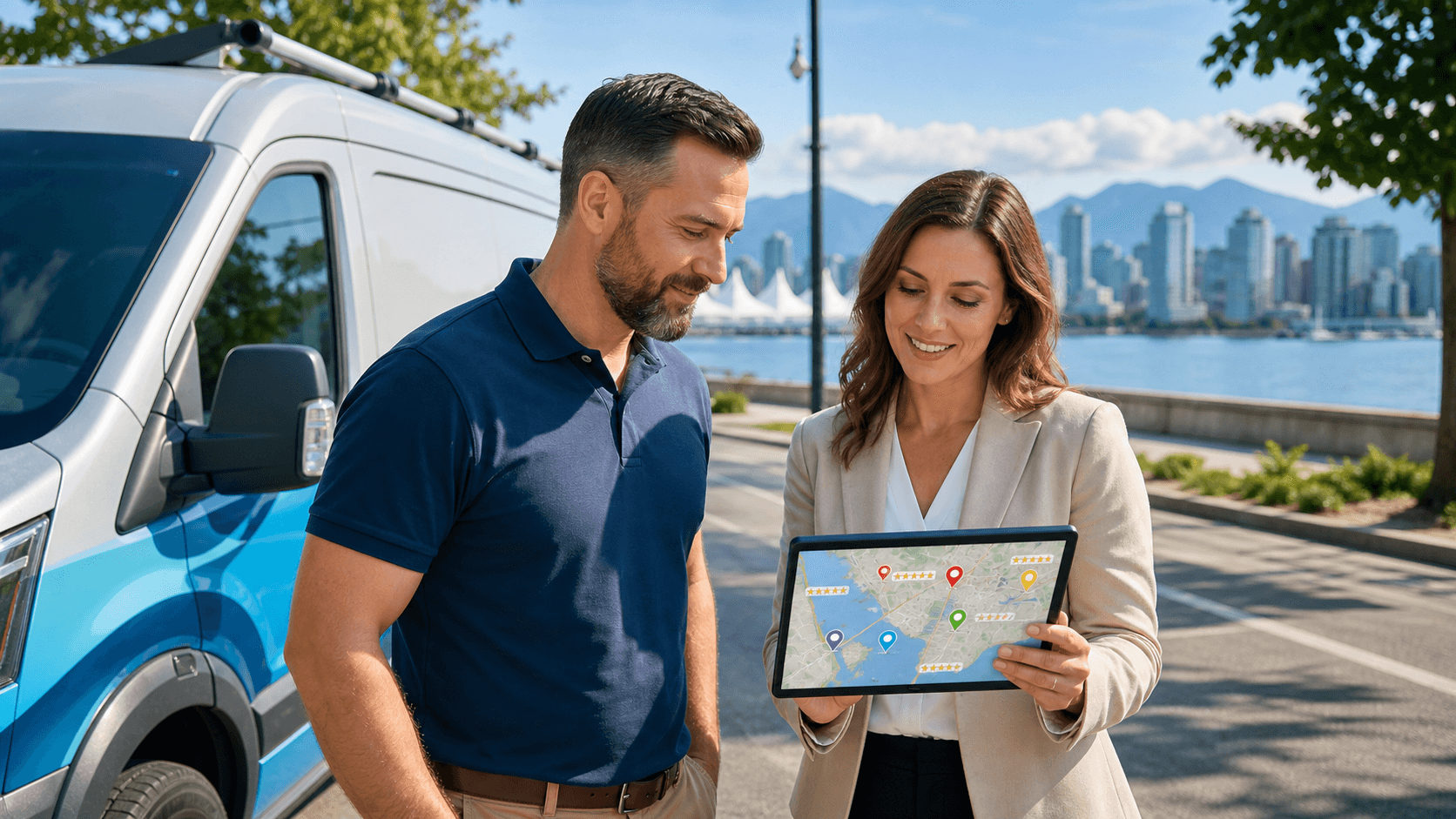
Capturing Real AI Search Demand in Your Service Area
AI search is changing how people find local services in Canada. When someone talks to a search chatbot or sees an AI Overview, they are often guided straight to a local pack, a map, or Local Services Ads instead of a simple list of blue links. That shift matters if your business depends on calls, bookings, and walk-ins, especially as we head into busy summer months.
Old SEO reports that focus only on rankings do not tell the full story anymore. What matters now is how well your brand turns AI-driven visibility into real actions like calls, form fills, and direction requests. At SpottableAI, we call this AI search demand capture, and we focus on tying AI search optimization directly to outcomes in each service area you care about.
Rethinking SEO Metrics in an AI-First Search World
For service-based and multi-location businesses, traditional SEO metrics are starting to feel a bit shallow. Being number one for a keyword does not always mean you get the enquiry if AI layers and local surfaces push users toward other options first.
Classic metrics like:
- Average position
- Total organic sessions
- Generic click-through rate
All miss a simple question: did someone actually try to contact you?
AI search shifts attention toward intent-led actions, especially on phones:
- Tap-to-call from your Google Business Profile
- Mobile form fills from service pages or landing pages
- Message or chat clicks from local surfaces
- Navigation taps when people are ready to visit
Seasonal peaks make this even clearer. In spring and summer, demand for home services, wellness, tourism, and outdoor activities spikes as the weather warms up across places like Ontario and the rest of Canada. Generic traffic numbers might jump or dip, but the most valuable signals are those action events: booked jobs, consultations, and in-person visits. Reporting needs to line up with those business outcomes instead of stopping at impressions or basic rankings.
Using Google Business Profile to Track Local Demand
Google Business Profile is one of the best places to see AI-influenced local demand in real time. When AI answers include local packs or map results, your profile is often the next click.
Key GBP insights to watch include:
- Calls
- Website clicks
- Direction requests
- Profile views by day and time
You can also see which keyword themes trigger your profile. That helps you understand what AI and users think you are known for in each service area.
To get more value from this data, break it down by:
- Service area or location
- Season or month
- Device, especially mobile vs desktop
For example, you might see a jump in direction requests on sunny weekends, or more calls in the evenings for certain services. That usually means AI-driven local packs are doing their job and sending people to local options that look ready to help.
The real power comes when you connect GBP events with:
- Call tracking numbers tied to each location
- Form analytics that record source, medium, and campaign
- Simple tags that mark which enquiry came from local search
This lets you attribute enquiries back to specific entities: a location, a practitioner, a service line, or even a branded concept within your business. Then you can test practical optimisation levers like:
- Categories and secondary categories
- Services and service descriptions
- Attributes that reflect what you actually offer
- Q&A content that answers common questions
- Photos and short videos that make you the obvious choice
All of these help AI surfaces understand and trust your business, which improves AI search optimization and demand capture.
Leveraging LSAs for High-Intent Lead Attribution
Local Services Ads sit right at the point of need. When someone types or speaks a query like "emergency plumber" or "chiropractor open now in Toronto," LSAs often appear before everything else, including AI Overviews.
These placements are packed with intent. The person is usually ready to call or book. Inside LSAs, the main signals to track are:
- Phone leads
- Message leads
- Bookings
- Disputes
- Close rates
Segment these by location and service type whenever possible. An HVAC team, for example, might separate cooling calls from heating calls, since summer and winter bring different needs and different AI-driven search patterns.
To really connect LSAs to AI search, map your leads back to the kinds of queries and surfaces that triggered them. This can show which entities are capturing demand:
- Specific offices or territories
- Certain practitioners
- Service lines with unique positioning
Seasonal tactics help here too. In Canada, long weekends, cottage season, tourism waves, and back-to-school all shift intent. You can adjust:
- Service types you focus on
- Ad schedules around peak enquiry hours
- Budgets during busy periods for your category
That way, you are not just buying visibility, you are aligning spend with high-intent AI-driven demand.
Mapping Entity-Level Attribution Across Channels
Entity-level attribution is about going beyond "website leads" and tracking outcomes for the real-world parts of your business: locations, practitioners, service lines, programs, or branded concepts.
A simple entity framework can pull together data from GBP, LSAs, organic, and AI surfaces:
- Unique tracking numbers for each location or service type
- UTM structures that mark source, medium, campaign, and entity
- Custom conversion events in your analytics platform
As AI search optimization improves, your brand and entities start to show up more often in AI answers and chat-style results. Users might see your business name, a specific practitioner, or a type of service you offer mentioned directly. If all those enquiries flow into one big bucket, you lose the chance to understand what is actually working.
With entity-level reporting, you can build dashboards that answer questions like:
- Which locations convert the most AI-exposed users into calls or bookings?
- Which practitioners get the highest close rate from AI-influenced leads?
- Which services look visible in search but underperform on enquiries?
- Where are people dropping off between viewing your profile and taking action?
This is where data turns into real decisions about staffing, service focus, and local messaging.
Turning Insights Into an AI-Ready Local Growth Plan
When we shift from rank-based reporting to action-based, entity-level attribution, the whole conversation around SEO changes. It stops being "How many keywords are we ranking for?" and becomes "Which locations turned AI search demand into booked work this month?"
A simple AI-ready local growth plan usually follows a few steps:
- Audit how you currently capture and track AI search demand across GBP, LSAs, and organic
- Instrument tracking properly, with clean numbers, tags, and events for each entity
- Build dashboards that line up with real goals, like calls, forms, and direction requests
- Test new offers, seasonal messaging, and profile updates, then measure impact at the entity level
As late summer and fall booking windows approach, competition for AI-influenced local visibility tends to heat up. Businesses that understand and measure AI search demand capture at the location level will be in a stronger spot to win those calls, form fills, and direction requests.
At SpottableAI, based here in Canada, we focus on this link between AI search optimization and real-world outcomes for service-based brands. By treating every enquiry as a signal and every entity as its own growth engine, it becomes much easier to see where your next wave of local growth can come from.
Boost Your Visibility With Smart AI Search Optimization Today
If you are ready to make your content easier to find, we are here to help you put AI to work for your search strategy. At SpottableAI, we use AI search optimization to help your audience reach the information they actually need, faster. Our team can work with your current tools and workflows so you get better results without adding complexity. Reach out today and let us help you turn your search data into clear, measurable growth.